The 3 Biggest Misconceptions About Emission Reduction – and How to Find the Truly Effective Lever
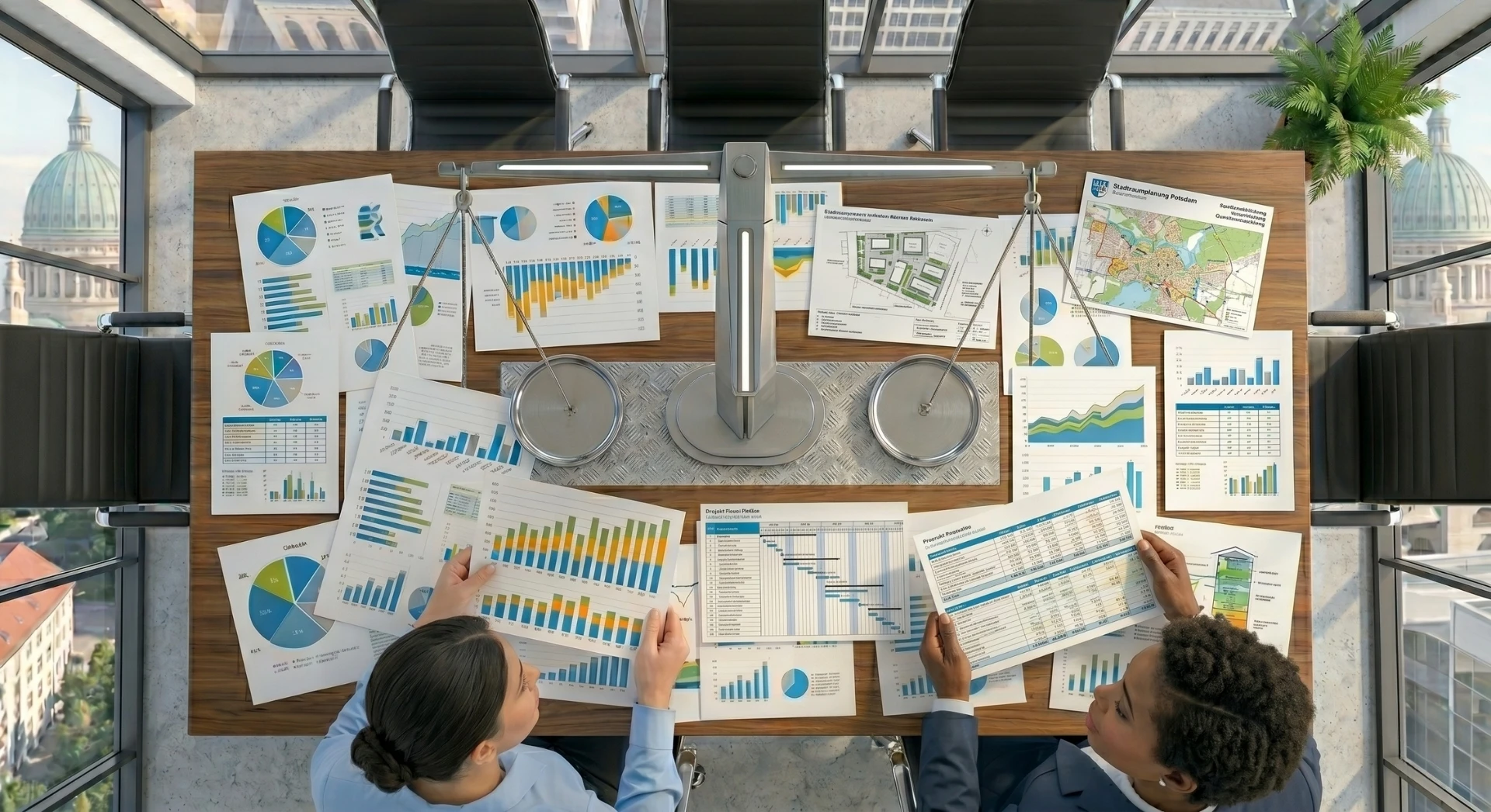
"What you can't measure, you can't manage." This statement currently leads many mid-sized companies into a dead end.
Many companies invest months in perfect reporting, only to realize: We now know how much we emit, but we still have no idea how to proceed.
Below, we present three of the biggest misconceptions on the path to reduction – and the right solutions to achieve real resource returns.
1. The Assumption Error: "The footprint shows the way to reduction"
The assumption sounds plausible but is logically flawed. A carbon footprint is a purely aggregated number – and numbers don't contain instructions for the next most sensible step.
The Problem:
Knowing that a site emits 100 tons of CO₂e will never lead you to the solution. The number "100" tells you nothing about your roof's structural capacity for photovoltaics or the valve control of your heating system. There is no data correlation between the emission value and the technical measure (e.g., zone control).
The Solution: Think Solution-First.
Start with the technical options available in your industry. Only those who know which solutions exist can develop a realistic reduction pathway.
2. The Focus Error: "Data quality is the most important criterion"
Companies often hesitate to take action because the data basis for a decision is not yet considered "perfect."
The Problem:
The real obstacle is not the lack of data, but the lack of decision logic. A report manages the status quo, but it doesn't evaluate investments. Without the context of costs and amortization, every reduction idea remains stuck in theory.
The Solution: Prioritize the business case.
Sustainability is not an end in itself, but an economic lever. Every measure must be evaluated for its profitability, because: reduced costs = reduced CO₂.
3. The Process Misunderstanding: "Reduction is an organic follow-up step to reporting"
The assumption is that reduction is an automatic byproduct of measurement.
The Problem:
Reporting is retrospective; reduction is shaping the future. An ESG report documents the past, while real savings require clear operational decisions in the here and now.
The Solution: Establish a Digital Controller for Sustainability.
Use tools that don't just measure, but allow you to actively steer progress. A digital controller connects your goals directly with profitable measures, creating a manageable roadmap.
Conclusion
Your carbon footprint is your speedometer, not your navigation system.
If you want to arrive at your destination, you can't just look at the display – you need to actively steer, specifically toward where sustainability and profitability converge.
If we can help you identify your levers, or if you need a second opinion on your roadmap – we look forward to getting to know you.
Don't hesitate to send us a message or book an appointment for a brief exchange.
Best regards and "happy Emissions Reduction" – let's turn it into a resource return!
Harriet von Kügelgen
📧 Interested?
If you're currently working on prioritizing measures, implementing them, or finally getting a better overview – feel free to write to us. We'll show you, without obligation, how dauri supports you in planning, implementation, and impact measurement.
📧 Simply send an email to hello@dauri.de or book an appointment directly.